

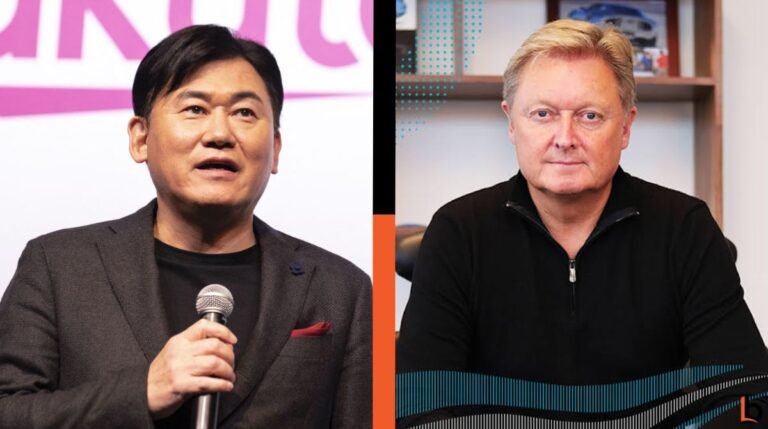
Two famous founders keep showing up in the same search. Hiroshi Mikitani and Henrik Fisker work in very different worlds. Mikitani built Rakuten, a Japanese internet group. Fisker designed stunning luxury cars and then launched two electric vehicle companies. Public records show no direct business tie between the two men. So why compare them? The answer is simple.
Their stories teach sharp lessons about risk, money and scale. In this guide, you’ll see their profiles, career paths and net worth estimates. You’ll also learn what went right for one and wrong for the other. Ready to see how an ecosystem builder stacks up against a design-first founder? Let’s dive in.
Quick Profile Summary: Hiroshi Mikitani and Henrik Fisker
You want the facts fast. So here they are. Hiroshi Mikitani is the Rakuten founder and still runs Rakuten Group. Henrik Fisker is a Danish automotive designer who launched Fisker Automotive and later Fisker Inc. Both men carry strong personal brands. Both also took big swings in business.
The table below shows the core details. Treat every figure as an estimate. Public sources don’t always agree.
| Detail | Hiroshi Mikitani | Henrik Fisker |
| Born | March 11, 1965, Kobe, Japan | August 10, 1963, Allerød, Denmark |
| Age (2026) | 61 | 63 |
| Nationality | Japanese | Danish |
| Education | Hitotsubashi University, Harvard Business School MBA | ArtCenter College of Design |
| Profession | Founder, chairman and CEO of Rakuten Group | Automotive designer and entrepreneur |
| Known for | Rakuten Ichiba, Rakuten Mobile | BMW Z8, Aston Martin DB9, Fisker Karma, Fisker Ocean |
| Spouse | Not publicly confirmed in the sources reviewed | Geeta Gupta-Fisker |
| Net worth | Roughly $1.9 billion to $4.3 billion | No recent verified figure |
Is There a Connection Between Hiroshi Mikitani and Henrik Fisker?
No public record shows a joint company, investment or partnership. They don’t share a board. They don’t back each other’s ventures. Rakuten also isn’t a carmaker. Its core work covers online shopping, banking, cards, travel and mobile service. So a secret deal would look out of character.
Think of it like comparing a chef with a farmer. Both work in food. Their daily jobs look nothing alike. That contrast makes the comparison useful. You can study how two entrepreneurs handled business risk in different worlds.
Why Do People Search for Both Names Together?
Curiosity drives most of it. Readers see two famous founders and wonder if their paths crossed. Search engines also group similar topics, such as EV founders, global business leaders and famous entrepreneurs. A comparison article like this one links them on purpose.
Is the Nissan Link Real?
A Japan link does exist in the Fisker story. In early 2024, Nissan reportedly held talks to invest more than $400 million in Fisker’s truck platform. Those talks failed. Nissan and Rakuten are separate companies. Treat any claim of a hidden Mikitani deal as rumor unless a named source backs it.
Who Is Hiroshi Mikitani?
Mikitani is the founder, chairman and CEO of Rakuten Group. Friends call him Mickey. He was born in Kobe on March 11, 1965. His style blends Japanese finance training with global business thinking. People now see him as a platform builder. He doesn’t sell one thing. He connects many things.
His career started in banking. Then a disaster changed his plans. He took a bold leap and started his own firm. That leap turned a small web shop into a global internet group. Today the brand spans shopping, banking, credit cards, travel and mobile service.
Early Life and Education
Mikitani earned a commerce degree from Hitotsubashi University in 1988. He then joined the Industrial Bank of Japan, which is now part of Mizuho. While working there, he studied at Harvard Business School. He finished his MBA in 1993. That mix of finance and global training shaped his later style.
From Banker to Founder
The Kobe earthquake of 1995 hit his hometown hard. Many accounts say it pushed him to leave banking. He wanted to help rebuild Japan’s economy. He founded the consulting firm Crimson Group in 1996. In February 1997 he started MDM Inc., which later became Rakuten. The online mall Rakuten Ichiba opened that May with just 13 merchants.
Hiroshi Mikitani and the Rakuten Ecosystem Strategy

Rakuten stopped being “just a marketplace” long ago. Mikitani built a connected web of services instead. One customer can shop, pay by card, bank, trade stocks, book travel and use a mobile plan. All of it runs under one account. This ecosystem strategy makes customers stay. Leaving feels like a hassle.
Many online malls acted like landlords who collect rent and walk away. Mikitani did the opposite. He gave merchants training, tools and community. When the shops grew, the mall grew too. That shared success made Rakuten Ichiba a hit. The group also bought companies such as Viber, Ebates and Kobo to reach new markets.
How the Rakuten Points Flywheel Works
Rakuten Points act as the glue. You earn points when you shop. You earn more when you pay with Rakuten Card. You can then spend them across the group. Each service feeds the others. More use brings more data and more loyalty. Then the cycle repeats.
Case Study: Rakuten Mobile
Rakuten Mobile shows his appetite for big bets. The company launched its own cloud-based network in 2020. Japan already had three giant carriers. Few people thought a newcomer could break in. The buildout cost billions and weighed on group profits for years. Subscribers still kept growing. The lesson is clear. Mikitani plays a long game and accepts short-term pain.
Who Is Henrik Fisker?
Henrik Fisker is a Danish automotive designer and entrepreneur based in Los Angeles. He was born on August 10, 1963 in Allerød. His name carries weight among car fans. He’s a design-first founder who believes beautiful cars can also be sustainable. Both of his car companies ended in bankruptcy. That fact now shapes how people read his story.
Before he became a founder, he made his name as a designer. His sketches shaped some of the most admired cars of their era. That reputation gave his own brands instant attention. However, design talent and factory skill are two different things. His later story shows that gap clearly.
Design Career at BMW, Ford and Aston Martin
Fisker worked at BMW, Ford and Aston Martin. His best-known credits include the BMW Z8 and the Aston Martin DB9. He also worked on the Aston Martin V8 Vantage. The silver Z8 even starred as a Bond car in 1999. From 2001 to 2003 he led Ford’s London design center. Car design is a team sport. Fisker led the work, but others shaped it too.
Education and Early Life
Fisker grew up in Denmark. He trained in transportation design at the ArtCenter College of Design, using its Swiss campus. That school has sent many graduates into top car studios. He joined BMW’s design world in 1989. From there his career took off.
Readers Also Enjoyed: Jodie Foster and Alex Gorsky: Are They Connected? Facts for 2026
Henrik Fisker’s Business Journey: Fisker Automotive, Fisker Inc. and the 2024 Bankruptcy
Fisker first went solo with Fisker Coachbuild in 2005. The firm gave luxury cars custom bodywork. Then he aimed bigger. He launched Fisker Automotive in August 2007 in Anaheim. Its first car was the Fisker Karma, a plug-in hybrid sports sedan. The car looked stunning. It also suffered from quality problems.
His second shot came in 2016 with Fisker Inc. The company went public in October 2020 and raised more than $1 billion, according to Forbes. The plan sounded smart. Fisker wanted to be the “Apple of the auto industry” by outsourcing manufacturing. Sadly, the plan met the harsh math of scaling a car company.
The Fisker Karma Era
The Fisker Karma reached buyers around 2011. A large U.S. Department of Energy loan backed the company. Then battery supplier A123 Systems went bankrupt in 2012. A battery recall hurt the car’s name. Fisker resigned in 2013. The company filed for Chapter 11 bankruptcy later that year. China’s Wanxiang Group bought the assets in 2014 for about $150 million.
The Fisker Ocean and the Chapter 11 Filing
The Fisker Ocean began production in 2022 at Magna Steyr in Graz, Austria. It started at $38,990 in the U.S. Early reviews praised the styling. Owners and critics pointed to software bugs and slow fixes. The slide came fast, as the table shows.
| Date | Event |
| 2023 | Built more than 10,000 vehicles but delivered fewer than half |
| January 2024 | Moved to a dealer model and recalled 12,523 Ocean vehicles over door handle issues |
| February 2024 | Warned it might run out of cash within a year |
| March 2024 | Cut 15% of staff as the Nissan talks collapsed |
| June 17, 2024 | Filed for Chapter 11 bankruptcy |
Hiroshi Mikitani and Henrik Fisker Net Worth Compared
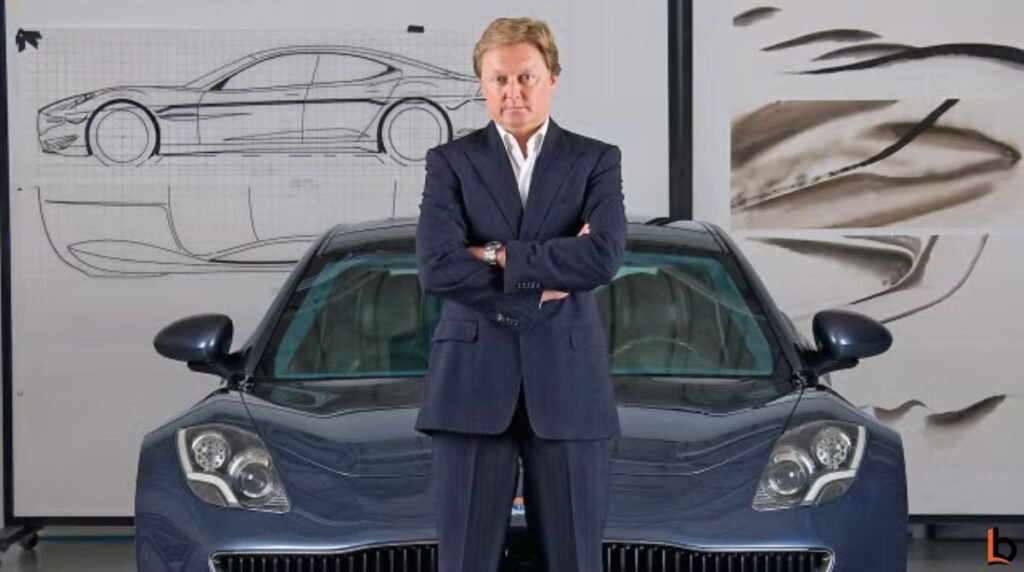
Mikitani’s net worth sits in the low billions. Fisker’s net worth has no trusted recent number. That gap in data matters as much as the figures. One report cites about $3.65 billion for Mikitani on a mid-2026 Forbes Japan list. Other trackers range from roughly $1.9 billion to $4.3 billion. Fisker’s best-known figure is about $1.1 billion, a Forbes estimate from his 2020 peak.
Fisker’s paper wealth reportedly fell sharply after the 2024 filing. No trusted outlet has published a fresh number since. Some sites list $500 million without clear sourcing. So treat those claims with care. Always check the date and the source before you trust a net worth estimate.
| Factor | Hiroshi Mikitani | Henrik Fisker |
| Main wealth source | Rakuten shares and investments | Fisker Inc. shares and design work |
| Best-known estimate | About $3.65 billion (mid-2026, per one report) | About $1.1 billion (Forbes, 2020 peak) |
| Other estimates | Roughly $1.9 billion to $4.3 billion | Some unsourced sites list $500 million |
| Reliability | Moderate | Low |
Why Net Worth Figures Differ
Share prices move daily. Trackers value his Rakuten stake on different dates. Some lists add family holdings or private assets. Others skip them. For Fisker, the main problem is missing data after the bankruptcy.
Career Comparison: Hiroshi Mikitani vs Henrik Fisker
Here’s the big picture. Mikitani built a diversified internet group. Fisker built brands around design and then struggled with manufacturing. Mikitani’s model lets success in one area fund the next. Fisker’s model put the whole company at risk with every vehicle launch. That single difference explains much of the outcome.
Capital needs also differ. A marketplace can launch small and grow step by step. Rakuten started with 13 merchants. A car company needs huge cash before the first sale. It must fund engineering, suppliers, tooling and recalls. Therefore the business risk looks very different for each man.
| Area | Hiroshi Mikitani | Henrik Fisker |
| Industry | Ecommerce, fintech, mobile | Automotive design, electric vehicles |
| Biggest creation | Rakuten Ichiba and the Rakuten ecosystem | Fisker Karma and Fisker Ocean |
| Business model | Many linked services under one brand | Design-led, outsourced production |
| Major setback | Rakuten Mobile costs and profit pressure | Two bankruptcies, in 2013 and 2024 |
| Current status | Still chairman and CEO of Rakuten Group | Fisker Inc. in bankruptcy; no new company confirmed in sources reviewed |
Ecosystem vs Single Product
An ecosystem spreads risk across many services. A single product puts all the risk in one place. If the Ocean stumbled, little else could catch the fall. Apple proves product companies can win. Still, a lone product needs extra discipline and cash. You can check Rakuten’s latest numbers on its investor relations page.
Key Lessons From Hiroshi Mikitani and Henrik Fisker for Entrepreneurs
The main lesson is simple. Vision needs execution. Both men show this in opposite ways. Mikitani paired big ideas with systems and capital discipline. Fisker paired big ideas with great looks but weaker manufacturing control. So ask yourself two questions before any big move. How much can I lose? How long can I survive if everything takes twice as long?
Takeaway: A great design opens the door. A great system keeps the customer inside.
Customer trust also matters. After the filing, Ocean owners faced limited service and parts support. That fallout shows why customer experience after the sale counts as much as the sale itself. Rakuten’s points and smooth shopping flow build trust every day. Small, repeated good experiences add up.
Lessons From Mikitani
Crisis can redirect a career. The Kobe earthquake pushed him from banking to founding. He also diversified across shopping, finance and mobile. Rakuten still suffered setbacks. It closed several overseas operations and carries heavy costs from its mobile push. Great leaders adjust course instead of defending every choice.
Lessons From Fisker
Great design isn’t enough. His cars looked stunning, yet production and quality decided the outcome. Fast scaling without steady sales drained Fisker Inc. Outsourcing also has limits. Handing off manufacturing can leave a brand exposed when partners or funding fall through. He did try again after his first failure. Persistence matters. Learning from the first attempt matters even more.
Conclusion
Hiroshi Mikitani and Henrik Fisker share no company, yet they share a lesson. Ideas matter. Systems and funding matter more. Mikitani built a connected ecosystem that grows stronger with every new service. Fisker designed gorgeous cars and then met the harsh economics of scaling a car maker.
So match your vision to a model you can fund, scale and support. Do that and your odds improve a lot. Which founder’s path speaks to you most? Share your thoughts in the comments. If this guide helped, pass it along to a fellow entrepreneur.
FAQ’s About Hiroshi Mikitani and Henrik Fisker
Who are Hiroshi Mikitani and Henrik Fisker?
Hiroshi Mikitani is the founder and CEO of Rakuten Group, while Henrik Fisker is a Danish car designer and founder of Fisker Inc. They have no known business tie.
What is Henrik Fisker currently doing?
After the June 2024 bankruptcy, no new company is confirmed in the sources reviewed. Check his official channels for the latest design or business updates.
What is Henrik Fisker’s net worth?
No trusted recent figure exists. Forbes valued him at about $1.1 billion at his 2020 peak, and that wealth reportedly fell sharply after the 2024 filing.
Why did Fisker collapse?
Production delays, software and quality problems, recalls and heavy cash burn drained the company. The failed Nissan investment talks then removed its last lifeline before the Chapter 11 filing.
Which cars did Henrik Fisker design?
He designed the BMW Z8, Aston Martin DB9 and Aston Martin V8 Vantage. As a founder, he also launched the Fisker Karma and Fisker Ocean.
Readers Also Enjoyed: Jodie Foster and Alex Gorsky: Are They Connected? Facts for 2026
